
Seasonal Stories: Beating the Blackout – Your Winter Guide to Solar + Storage
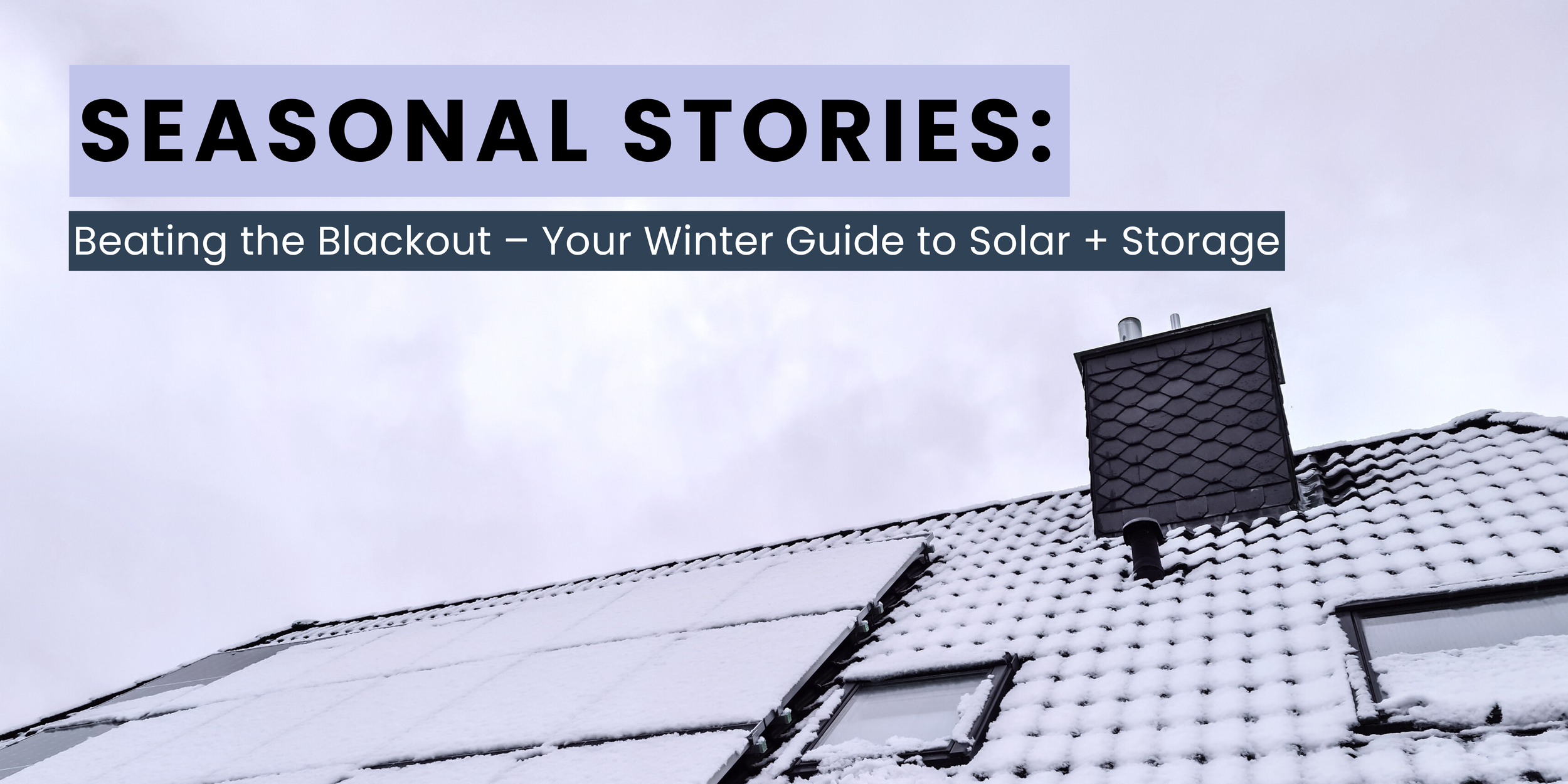
A residential roof with solar panels, both partially covered with snow.
This past week, Winter Storm Fern served as a stark reminder for Triangle residents why precautions around ice and ice storms are so important. As freezing rain coated North Carolina counties, we saw familiar scenes of sagging power lines and slick roads that brought the state to a standstill. Outside the Carolinas, conditions are even worse, with 290,000 people still without power today.
While many homeowners were left without electricity for hours or days, those with solar and battery storage systems experienced a very different storm. Here is why solar and storage are becoming the ultimate necessity to endure winter storms for North Carolina homeowners.
Why Ice Causes the Grid to Fail
Winter Storm Fern brought significant ice accumulation that caused slick conditions and widespread outages across the Triangle. Unlike a summer thunderstorm that passes quickly, winter ice storms cause prolonged damage. When freezing rain builds up on power lines and tree limbs, the weight becomes unbearable, leading to cascading outages that can take crews days to repair in freezing temperatures.
Furthermore, the shift to remote learning during these storms highlights how vital a stable home connection has become. Without power, there is no Wi-Fi, no heat, and no way for families to stay productive or safe.
Solar Panels: Built for the Cold
It is a common misconception that solar panels "go dormant" in the winter. In reality, Winter Storm Fern showed us that:
Cold Boosts Efficiency: Solar panels are electronic devices. Like your laptop or phone, they actually perform more efficiently in the crisp, cold air of January than in the humid heat of July.
The Albedo Effect: Sunlight reflecting off a fresh layer of snow can actually hit your panels from multiple angles, occasionally resulting in a spike in energy production once the panels are clear.
Minimal Maintenance: Most ice and snow will slide right off the tempered glass of a solar array as the cells begin to warm up from the sun’s rays, resuming power generation while the grid is still being repaired.
The Battery Difference: Safety When the Lights Go Out
During the height of Winter Storm Fern, the difference between a standard solar system and a Solar + Storage system became clear. Most solar systems are grid-tied; for safety reasons, these systems are required to shut off when the grid goes down.
However, with battery storage, many homes can become their own "microgrid." A battery system automatically detects a grid failure and takes over in milliseconds, keeping most:
Heating system fans running which is essential for gas or electric furnaces.
Refrigerators powered to prevent food spoilage during multi-day outages.
Wi-Fi connected to maintain a sense of normalcy and safety by keeping you linked to emergency updates, remote work, and virtual classrooms.
Peace of Mind with Clean Energy
Unlike noisy gas generators that need annual maintenance and upkeep and require you to venture out onto icy roads to find fuel, a solar battery recharges silently every time the sun comes out. Even on a cloudy winter day, your panels are topping off your reserve, ensuring you have power for the following night.
Winter Storm Fern taught us that preparing for the worst is no longer optional in North Carolina. By investing in solar and battery storage through a zero-down lease, you are ensuring that the next time the Triangle freezes over, your house remains a warm, safe, and powered home.
Don’t wait for the next outage to think about backup power. Consider leasing with EnerWealth, and stay powered this winter!
Contact EnerWealth today to see how our solar + storage solutions can protect your family year-round. Stay safe this weekend in the snow!
Cited Sources
Icy spots linger around Wake schools as parents brace for another round of snow closure
More Than 60 Deaths From Winter Storm Fern; 290,000 Still Without Power Ahead Of Weekend Storm
Rapid Reaction: Weekend Winter Storm Brings Icy Glaze, But Few Outages
Slick conditions increasing around Triangle as freezing rain moves through
WRAL 5 On Your Side: Best ways to get prepared for power outages
